

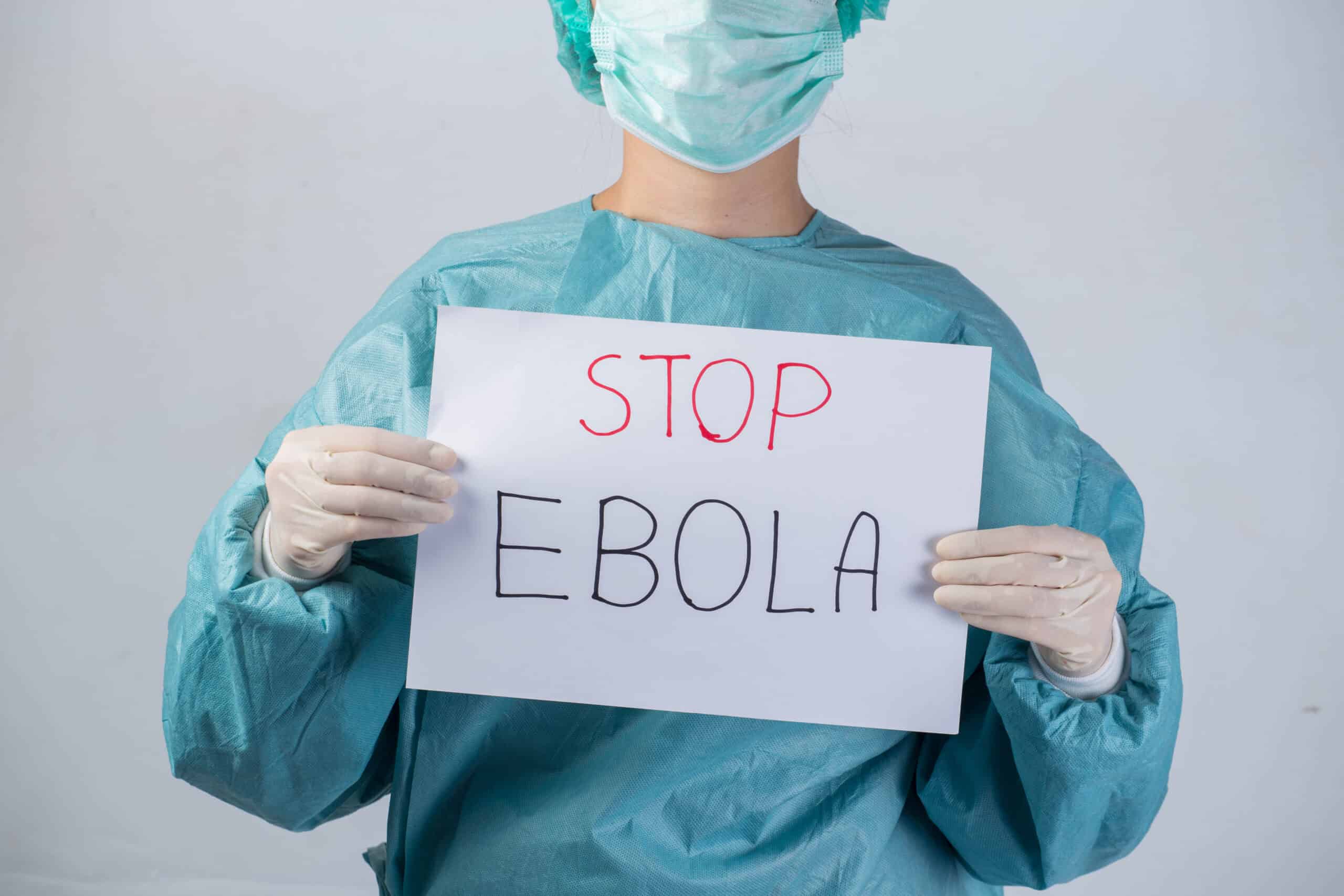
Ebola is a rare but deadly disease caused by a virus. There is an outbreak in Africa of significant global concern.
What are the 4 Facts you need to know about Ebola?
The 4 facts you need to know are simple: (1) Ebola is a rare but deadly disease caused by a virus, (2) signs are fever, headache, vomiting and diarrhea (can be bloody) and sometimes “pink,” eye, (3) you cannot get Ebola by sitting next to someone with Ebola only by direct contact, and (4) the U.S. remains at low risk for Ebola and no cases have been reported to date.
What is Ebola, and what does it do?
Fact #1: Ebola is a rare but deadly disease caused by a virus. It’s also known as viral hemorrhagic fever (VHF) because it causes high fevers and internal bleeding due to its impact on the body’s ability to clot. Ebola virus is currently isolated to Africa in the Democratic Republic of the Congo (DRC) and Uganda. As of June 17, 2026, no cases have been reported in the U.S. There was one American citizen who tested positive for Ebola after humanitarian work in the region and has since recovered. The risk of dying of infection with this strain of Ebola is about 30 %. CDC says the U.S. is at low risk for infection at this time.
Ebola virus normally lives in animals or mammals mostly fruit bats. They are called “fruit,” bats because they feed on fruit and pollen. They are native to Africa, Asia, and the Pacific islands. The bats carry the virus but do not get sick. Bats get people sick either by direct contact or fruit contaminated with their saliva, urine or feces. Ebola has a “spillover,” effect meaning once a person is sick with the virus it can spread or spill over to other people.
The reason that bats do not get sick says the experts is bat’s cells change the virus making it less harmful allowing the virus and bat to “co-exist,” without the bat getting sick. Interestingly, this is not the same for all animals. Gorrillas and chimps are very susceptible to Ebola and die at high rates unlike bats.
A typical transmission pattern would be a bat with Ebola contaminates fruit, an animal eats the fruit, the animal becomes sick from the fruit and dies, and a hunter handles the meat and gets sick with the virus. This in turn “spills,” over to other people spreading the virus.
The most recent Ebola outbreak in Africa started with a single health care worker getting sick in April 2026. The worker had fever, bleeding, vomiting and severe weakness before dying. The initial test for was negative for Ebola but came back 3 weeks later positive for a rare strain called Bundibugyo or BVD.
BVD has no treatment and no vaccine. The good news is if caught early and symptoms treated the survival rate is better than other types of Ebola. On May 17, 2026, Ebola was declared an international public emergency by the WHO (World Health Organization) as it is quickly spreading over the region.
What are the signs and symptoms of Ebola?
Fact #2: The main signs of Ebola are a sudden onset of fever (100. 4 F or more), headache, vomiting, and diarrhea. The vomit or stools may show signs of bleeding. Some people get stomach pains, weakness, and “red,” and painful eyes where the virus invades the eye directly. It may be an early or late sign of the disease.
The time from infection to symptoms can range between 2 to 21 days with the average of 8 to10 days. This means you can be infected for up to 21 days before showing any signs of being sick.
If you travel to one of the regions in Africa on high alert for Ebola, come in contact with someone with Ebola, or have symptoms of Ebola important to seek medical attention immediately as the outcome is better the sooner treatment starts including fluids, antibiotics for possible bacterial infection, and control of nausea, vomiting and diarrhea.
There are different strains of Ebola responsible for different outbreaks with the Zaire Ebola being the deadliest having a death rate of up to 90 %. The current strain (Bundibugyo) says the CDC is less deadly with a death rate of 30 %. As of, June 17, 2026, the CDC reports 915 cases with 234 deaths to date.
How do you get Ebola?
Fact #3: You can NOT get Ebola from breathing it in like the flu or COVID. It is not transmitted by sitting next to someone who is sick. It is spread by contact with body fluid of an animal or person that is infected or by touching an object that has virus on it. The route of entry is usually by skin or mucus membranes including the eyes, nose and mouth.
It can remain on bedding (even after the infected person leaves) and is found in urine, sweat, blood, feces, and semen. It can also be spread by eating infected animals including “bushmeat,” like antelopes or other forest animals found in the African regions of high infectivity. Of interest, people cannot spread disease to other people before symptoms appear, but virus may remain in certain body fluids after recovery and has been reported to spread from people who have died.
If you have not travelled to regions of high risk of Ebola including DRC, and Uganda you are at very low risk of getting Ebola. In order to prevent spread of the virus, there are enhanced global screenings in place especially during large gatherings like the World Cup however the risk of Ebola remains low as it is NOT spread through air like the flu and other respiratory illnesses.
How to protect yourself from getting Ebola?
Fact #4: There is a low risk of getting Ebola in the U.S. and there have been no cases reported to date. It is important if you do travel abroad to regions of potential risk to check the CDC or travel advisory on a regular basis for updates on travel restrictions.
Currently, there is no FDA approved vaccine or medications to treat this strain. It is important if you think you have been exposed to seek help immediately as early symptom treatment saves lives.
There is not a vaccination at this time for the BVD or current strain but there is a vaccine called ERVEBO to protect against the more virulent Zaire Ebolavirus strain. It’s a safe and highly effective single-dose vaccine. It is a weakened, live or modified virus that trains the immune system to fight Ebola without getting the disease itself.
Any last advice or facts on Ebola?
Ebola is group of viruses that was first reported in 1976 during an outbreak in Africa in the South Sudan and in DRC formally Zaire hence the name Zaire Ebola. It is the deadliest and per the CDC without treatment up to 90 % of cases can be fatal compared to the current virus at 30 %. The virus also takes its name from the Ebola River near the village where the disease was first reported.
It is interesting that bats (although different species) are linked with virus outbreaks including coronavirus or COVID, and Ebola. Scientists say the virus in bats has a very similar sequences that can infect people without many changes making a bat an ideal host for spreading disease either directly or indirectly.
The current outbreak remains a serious public health event with WHO and CDC amongst other agencies actively monitoring and supporting local communities and efforts. It is important that if you travel to these areas, exposed to sick contacts, or have symptoms suggestive of Ebola that you seek medical attention immediately as early detection and treatment saves lives. For further information and resources go the CDC website.
The 4 facts you need to know are simple: (1) Ebola is a rare but deadly disease caused by a virus, (2) signs are fever, headache, vomiting and diarrhea (can be bloody) and sometimes “pink,” eye, (3) you cannot get Ebola by sitting next to someone with Ebola only by direct contact, and (4) U.S. remains at low risk for Ebola and no cases have been reported to date.
If you have any questions, ask DoctorH we are here to help.
 Have Questions? AskDoctorH