

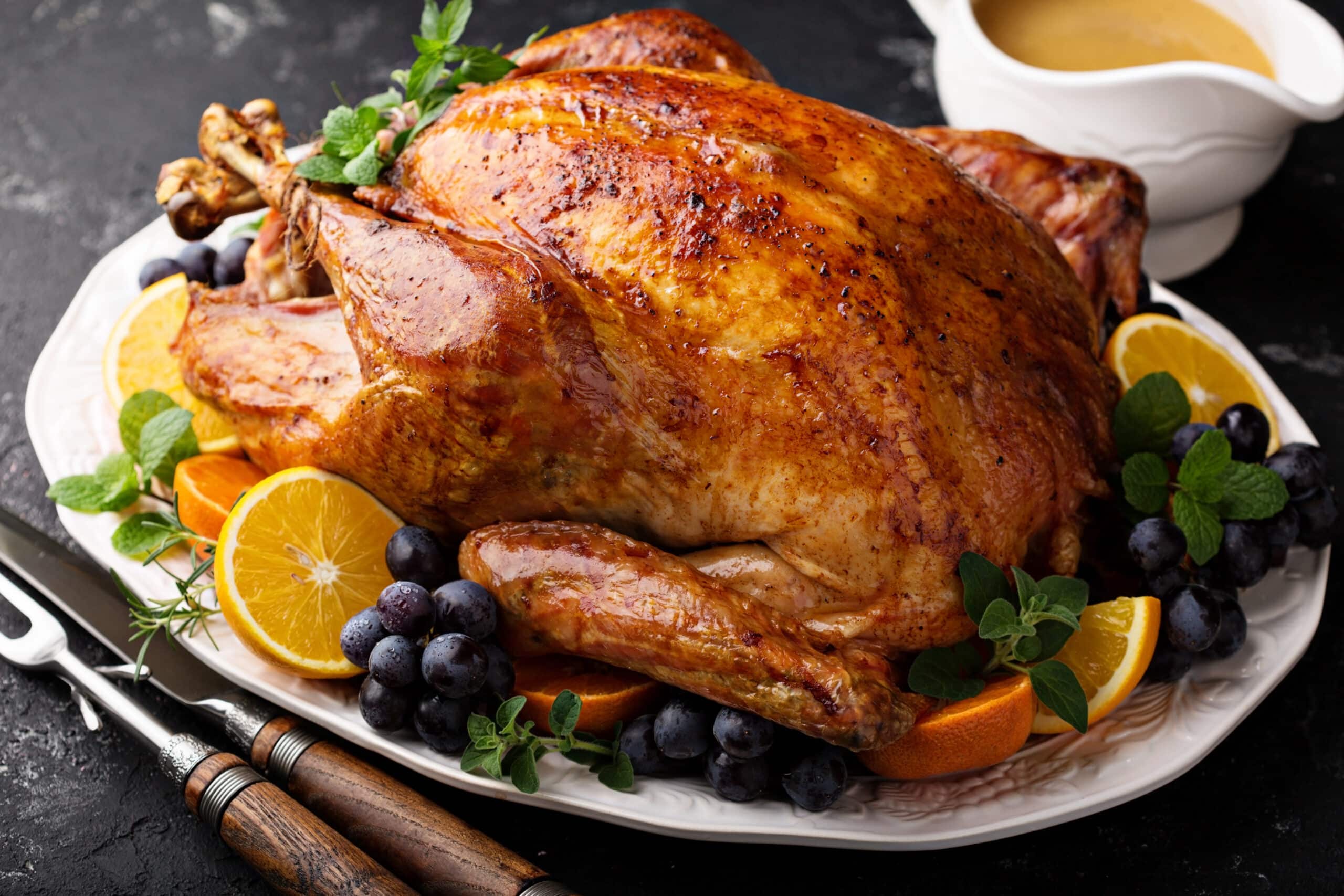

Thanksgiving is a time of joy-here are a few healthy tips on good eating while you celebrate this holiday season.
Are there tricks to eating less at Thanksgiving?
In an ideal world you could exercise “portion control,” but today is the day to sensibly indulge. Some tricks to portion control short of pushing away from the table includes resisting the urge to miss breakfast as missing meals may jump start your appetite. It’s best to have a small breakfast that include proteins like egg whites, and low-fat yogurt as keeps you fuller longer than simple carbohydrates like doughnuts or bread that break down quickly leaving you hungry sooner.
Another trick is to slow down or putting on the brakes during mealtime. The slower you eat the more you savor the different flavors and delights giving a greater sense of pleasure and “fullness,” with each bite. This translates into eating less and enjoying smaller food portions.
And don’t forget to take a brisk walk after you indulge. It’s a great way to burn a few calories and also spend time with friends and family. Research suggests that even a 10- or 15-minute walk after meals speeds up digestion leading to less heart burn and bloating, and even better sleep quality.
Is it safe to overeat during Thanksgiving?
Many of us indulge and overeat on Thanksgiving but healthy eaters and dieters stress over the idea. As you eat lots of food during a meal, the stomach expands to squeeze in the extra volume and if too full or eat too quickly this may cause discomfort, bloating, and heartburn but in general relief happens in no time as the stomach slowly empties over the next few hours.
The typical Thanksgiving meal is rich in delicious starchy foods, like sweet potatoes, and stuffing that can spike blood sugar levels as carbohydrates are broken down. In general, the body adapts quickly to metabolize the spike but may pose challenges for people with diabetes or problems with sugar control.
In terms of calories, and weight gain, the more you eat the more you gain. However, one indulgent meal should not lead to long-term weight gain but watch out for the higher salt loads found in the traditional Thanksgiving meal as can cause bloating and temporary weight gain. Drinking lots of water with your meal will help with digestion and flushing out excess salt (causing water weight gain) as your kidneys adapt quickly to changes in dietary salt intake.
Does the Thanksgiving meal raise blood pressure or cholesterol?
Cholesterol levels can spike depending on the amount of saturated fats if your diet, so try to avoid the skin of the turkey for example or heavy drippings rich in fats. Blood pressure and fluid retention can also be a concern for certain people with heart or kidney problems as large amounts of salt or sodium can be found especially in processed turkey to enhance flavorings and as a preservative.
Other processing techniques that add salt or sodium are brining, curing and marinating that can also raise blood pressure and lead to fluid retention making hands and feet look swollen and feel tight. Best bet is to stick to fresh turkey meat that is naturally low in fat and salt. Read labels and aim for 80 mg of sodium per 4-ounce serving and be careful of what you add-like sprinkling salt from a shaker and eating too much skin of the turkey.
Is dark or white meat from the Turkey healthier?
Both are healthy and a great source of protein and nutrients however white meat or turkey breast has less fat and fewer calories than dark meat or thighs and legs. Turkey is rich in vitamins and minerals including B-complex, niacin, Magnesium, Phosphorus, iron, Potassium, Zinc and Selenium. Selenium is an important mineral supporting our immune system keeping us healthy.
The US Department of Agriculture says 3 ounces of roasted turkey breast with the skin has 4.5 grams of fat with 135 calories compared to turkey breast without skin with only 1.8 grams of fat and 125 calories. Compare this to dark turkey meat with the skin at nearly double the amount of fat at 8.5 grams with 175 calories. The amount of fat and calories varies on how the turkey is prepared.
What about tryptophan (stuff that makes you sleepy) in Turkey, is it myth or reality?
It’s more of myth than a reality. Most people feel tired after a Thanksgiving meal and ready for a nap but likely not from the amount of tryptophan which is a type of amino acid (protein) found in a variety of foods like salmon, crab, shrimp, roast beef, and canned tuna. Tryptophan is converted to serotonin and may affect your mood and sleep cycles.
However, the amount of tryptophan in turkey is no more or less than other foods mentioned and even less per ounce that cheddar cheese. In reality what makes you feel sleepy is eating large amount of carbohydrates in the turkey feast including stuffing, sweet and mashed potatoes, and hot rolls.
If want to feel less sleepy after your feast use “portion control,” as the less you indulge the less sleepy you will feel.
What about vegan options for Thanksgiving?
There are also amazing vegetarian or vegan options such as plant-based seiten Turkeys that actually look like a turkey buy made with wheat-gluten. It’s high in protein and low in fats and carbs and is a good source of minerals such as Selenium and Iron. Other tasty vegan options are Lentil loaf or stuffed seasonable vegetables baked on a sheet pan and cubed tofu for protein.
Any final takeaways for Thanksgiving Holiday and health eating tips?
It’s only good news: You are unlikely to see any long-lasting bad effects of your mega meal like long-term weight gain-no matter how many calories it contains as a fun fact is that only so many calories can be absorbed in one sitting. Tips to healthy eating this Thanksgiving Day-start with a high protein breakfast, opt for smaller portions, eat slowly to savor every delicious bite, and if you indulge in turkey choose the breast of turkey without skin for fewer fats and calories. You can even try newer and healthy vegan options.
If you have medical problems like diabetes, heart problems, or high blood pressure, please check with your doctor before excessive indulging as the traditional turkey meal is loaded with lots of carbohydrates and salt.
If you any have questions, AskDoctorH. We are here to help.
 Have Questions? AskDoctorH