

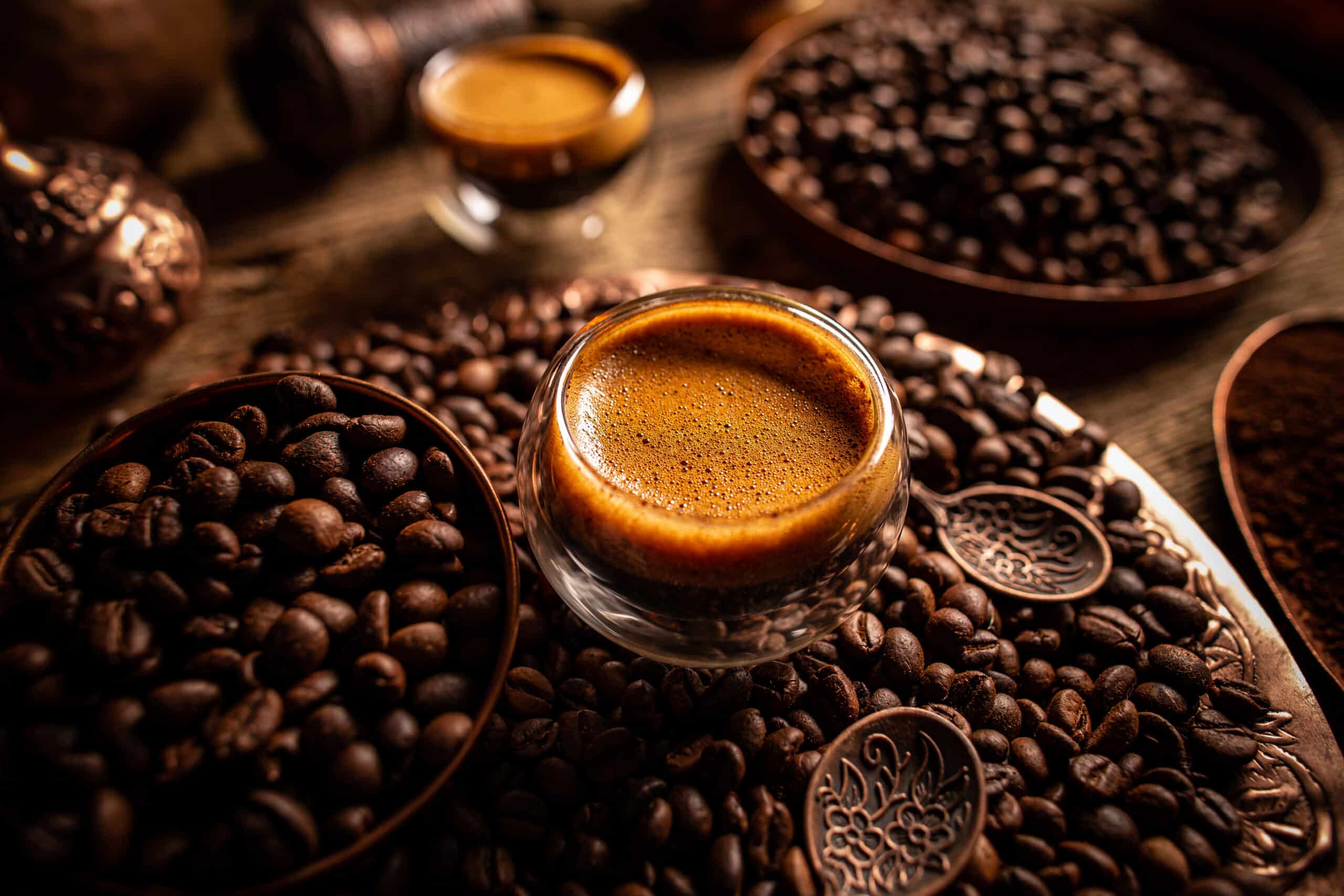

Coffee Beans come in 2 types: The Secret to good cholesterol is choosing the right Coffee Bean to stay healthy.
What are the 2 types of Coffee Beans?
There are 2 types of Coffee Beans that can be harvested: Coffee Arabica and Coffee Robusta. Coffee Arabica is the most popular and considered the premium bean making up 60 to 70 % of all coffee. However, Coffee Robusta bean is gaining steam. Both come from the popular “Coffee Bean Belt,” with Brazil being the top producer of Coffee Arabica and Vietnam of Coffee Robusta.
Coffee Arabica is known for its acidic with sweeter fruiter and flavor profile and but is more expensive as requires certain climates, conditions and temperatures to grow that has won it the gold standard of all coffee beans. Coffee Robusta is known for its bolder flavor some describe a deep dark chocolate bitter flavor, considerably less sugan and fat (60 % less), twice the caffeine of Arabica and can thrive in lower elevations and varying conditions. It is cheaper to harvest and manufacture and for years (some unfairly) considered the inferior bean.
Coffee Arabica bean is sold by Starbucks and other high-priced vendors and used in their daily brew and specialty coffees touting its better flavor and superior blends. Dunkin has ventured out with a propriety blend that uses a mix of Coffee Arabica beans and Coffee Robusta beans to create a fuller body espresso. Other manufactures including Cafe Bustero, and instant coffees like Maxwel House and Folgers are blending Coffee Robusta beans into their “Classic,” roasts.
Coffee Robusta bean is gaining popularity (as used to be make up only 10 % of coffee market) boasting unique qualities: making a delicious bitter espresso with a “frothy,” head, loaded with caffeine, antioxidants for good immune health and only half the cholesterol of its more expensive Coffee Arabica counterpart. Coffee Arabica also has its own health benefits including less acids for people with sensitive stomachs and special substances (Trigonelline) that can help improve blood sugar, and liver health.
When choosing Coffee Arabica or Robusta blend it’s also important to look at the type of coffee roasts. Roasts are categorized as light, medium and dark. As the name implies, lighter roasts are lighter in color leaving more nutrients behind due to shorter processing times at lower heating temperatures. Lighter roasts also retain more Coffee oils or “bad,” cholesterol compared with darker or refined roasts. Light-to-medium roasts also pack more caffeine contrary to popular belief that darker blends are stronger.
Historically Coffee Robusta are darker blends. The intense heat burns off the harsh, rubbery or woody defects transforming the beans into a deep bitter and smokey flavors with less cholesterol and more body that is ideal for Italian espresso blends and instant coffees.
What in Coffee Beans raises Cholesterol?
Coffee beans are rich in Coffee Oil or diterpenes that can significantly raise “bad,” cholesterol. It is the “oils,” that also give coffee its unique aromas and flavors. Coffee oils are one of the most potent cholesterol boosting compounds found in the human diet.
Coffee Arabica or the most popular coffee bean has almost double the amount of coffee oil compared to Coffee Robusta. The Coffee oils (especially Cafestol) spikes “bad,” cholesterol or LDL (low density lipoproteins) significantly with only 10 mg spiking cholesterol by 5 mg/dl or 5 points. In some cases, this translates into 1 cup of coffee depending on how it is brewed and roasted.
The secret to low cholesterol is not just in the bean or the roast with dark roast having the least but also in how we Brew. How we brew is critical in removing the oils while keeping the aroma and complex flavors intact. A drip Coffee maker, k-cup or coffee pods have paper filters that traps the cholesterol or Coffee Oils from escaping into our cup of coffee or brew. This contrasts to French press (uses metal filter), espresso maker, or boiled Scandinavian pots where there is no paper filter to trap the coffee oils.
The paper filter creates a barrier that is very efficient at removing most of the excess oils and cholesterol putting Coffee Arabica or par with Coffee Robusta in terms of cholesterol levels in the final brew. Check out my Blog on www.askdoctorh.com for Coffee and Cholesterol: The Secret is in the Brew to see how this works.
Any final advice on Coffee and Cholesterol?
Coffee is one of the most popular beverages worldwide. It even surpasses bottled water as a favorite drink. Two-thirds of Americans enjoy a cup of Joe with the majority choosing to brew at home. Drip Coffee makers with paper filters are the most common but single cup brewers, and k-cups are on the rise. Specialty coffee shops brew is at a record high with Espressos, Cappuccinos and Lattes leading the pack.
Coffee despite its popularity is not commonly associated with high cholesterol like other popular American foods including eggs, cheese, and foods high in saturated fats. It’s important to recognize that the Coffee oils can pack a bad cholesterol “punch,” raising LDL despite its other health benefits including better energy, improved mood, cognition or ability to think better, and even helps diabetes.
Tricks or tactics to lower Coffee oils or cholesterol includes reaching for more Coffee Robusta blends especially when choosing an espresso (made without a filter) as is ideal with its higher caffeine content, sharp and distinctive flavor. and “frothy,” head or crema not to mention a lower price tag.
If Coffee Robusta is not for you, then a quick and easy fix is to add a paper filter to your favorite Coffee Arabica blends as the filter traps almost all of the cholesterol rich sticky Coffee oils keeping your cholesterol levels down. So, reach for your favorite cup of Joe with all its heart healthy benefits when drank in moderation (3 cups a day). I suggest Coffee Arabica for your everyday coffee blends given its lighter notes using a Coffee drip filter if possible, and for specialty coffees like espresso (brewed without a paper filter) Coffee Robusta with its health benefits including less natural cholesterol, sugar and a magnificent “frothy,” head.
If you have any questions, askdoctorH, we are here to help.
 Have Questions? AskDoctorH